


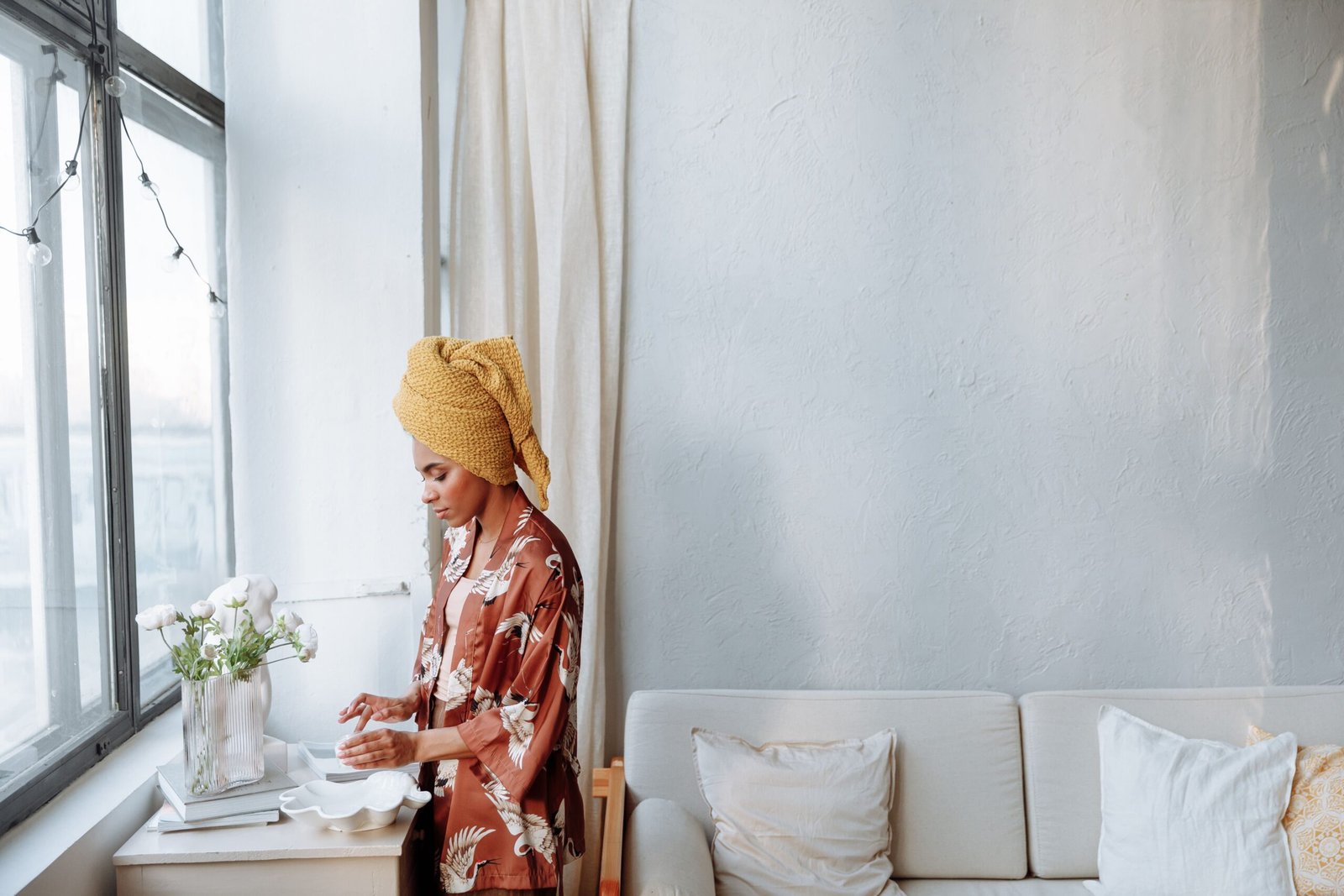
There’s a moment when a woman opens her closet and realizes she’s been dressing around a change she can no longer ignore. The clothes are still beautiful, but they belong to a version of her that she quietly has begun to outgrow.
I know this moment well because I’ve lived it more than once. It’s a moment women understand universally, but one that Black women carry wholly. As Black women, getting dressed is more than personal expression. Our clothing carries history, expectation, and with them, the weight of how we are seen before we have the chance to introduce ourselves.
For generations, Black women, particularly those of us navigating primarily white spaces, have had to navigate the complicated space between visibility and misinterpretation. We must be polished but not intimidating, beautiful but not threatening, confident but not too much. Above all, we must learn to dress for the room before we enter it. This is what makes the moment we begin dressing for ourselves feel so powerful.
My grandmother understood this without ever naming it. She spent her happiest summers near the water in Mexico, and I remember her in white linen and a wide-brimmed hat, with gold at her wrists catching the light when she laughed. She never called it style, and I don’t recall that word being one she used often. Instead, she’d describe her presence as inhabiting herself.
My mother, Vivian, carried that same certainty more quietly. She did not dress for approval because it was not an obligation she carried. Her whole lifetime of walking into rooms that were designed to keep her out. She understood, probably better than any woman I have met, the difference between being seen and being known. After she passed, I noticed something. Getting dressed had always been a kind of armor, the blazer to match the tone of the boardroom, the heel that added an inch of authority I had not yet earned. My mother had spent her life in spaces where she was not expected and never mistook the need to be prepared for the need to prove herself. I was still learning the difference.
But grief has a way of stripping the performance out of things. Slowly, getting dressed became less about defense and more about intention. A small, daily act of choosing who I was going to be that day, in her honor and in my own right.
That’s the thread I keep pulling on. Style, at its most honest, isn’t about being seen or convincing anyone of who you are. It’s about recognizing yourself before anyone has the chance to define you.
I see that same instinct in women who have chosen, publicly and privately, to enter chapters on their own terms.
Erykah Badu has been sitting on an album fifteen years in the making and spent the better part of the last year hosting sound meditations in small, intimate rooms where she’d share fragments of unfinished work and let people simply listen. She could have rushed the album out but chose not to, and there’s something powerful, if not instructional, in that refusal. A woman who knows herself doesn’t move according to someone else’s urgency.
Jodie Turner-Smith understood something similar when she stepped onto the Met Gala red carpet in white, not long after her divorce. She later described the look as deliberately bridal, not because she was promised to anyone, but because she was recommitting to herself. White signified a renewal as much as it did a refusal, and just like that, her new chapter was made public without speaking a word, because in a sense, she wore them.
Last month, Tracee Ellis Ross publicly recalled a retrospectively telling moment from her childhood. In an outing with friends, and the only Black girl among them, she noticed people staring, and made a decision in that moment that the stares were because she was gorgeous. She noted that amid life’s highs and lows, she comes back to that sense of self. As an outsider looking in, that confidence appears to serve as the foundation for her style evolution over the years, which has shifted along with her life chapters, from actress and CEO to creative, and all of the above.
None of these women needed a press release to announce who they were becoming. Their wardrobe said it first.
I think about these women and others like them often as a Black woman moving through midlife in a culture that still mostly categorizes reinvention as something that happens to us while we’re young. We are told, subtly and not so subtly, that our biggest transformations are behind us, and that maturity means settling rather than shifting. I don’t believe that, and both my grandmother and mother were examples of it.
Both were more of themselves in their later years, not their earlier ones. But as seen with Tracee Ellis Ross, and undoubtedly many other Black women, they were themselves from the start. It’s this strong sense of self—whether grown or naturally born— that’s a hallmark of some of the most stylish women.
So if you find yourself standing in front of the mirror, unsure why nothing quite feels the way it used to, trust that discomfort. Don’t wait until you can explain the shift in words. Let your hands reach for the piece that surprises you a little, the color you wouldn’t have chosen five years ago, the cut that asks for more room, more presence, more of you.
You don’t owe anyone an explanation for who you are becoming. Sometimes the truest thing you can do is simply get dressed like you already know.
Meet Our Contributor: Michele Y. Smith, currently serves as the Chief Executive Officer of the Museum of Pop Culture (MOPOP). Smith is a mission-focused leader with extensive experience in business development, operations, and finance in the nonprofit industry. Her people-centered leadership approach is the driving force behind her work at MOPOP which emphasizes a steadfast dedication to the democratization of philanthropy, the universal language of pop culture, diversity, equity, inclusion, and accessibility, and mentorship of emerging leaders.
Prior to her role at MOPOP, Michele served as the Chief Business & Financial Officer at the award-winning cultural institution, the Woodland Park Zoo, where she played a pivotal role in navigating the organization through the challenges of the COVID-19 pandemic. Her dynamic, mission-focused approach resulted in unprecedented growth across various facets of the institution, including revenue, events, guest services, admissions, automation, and finance.