No products in the cart.


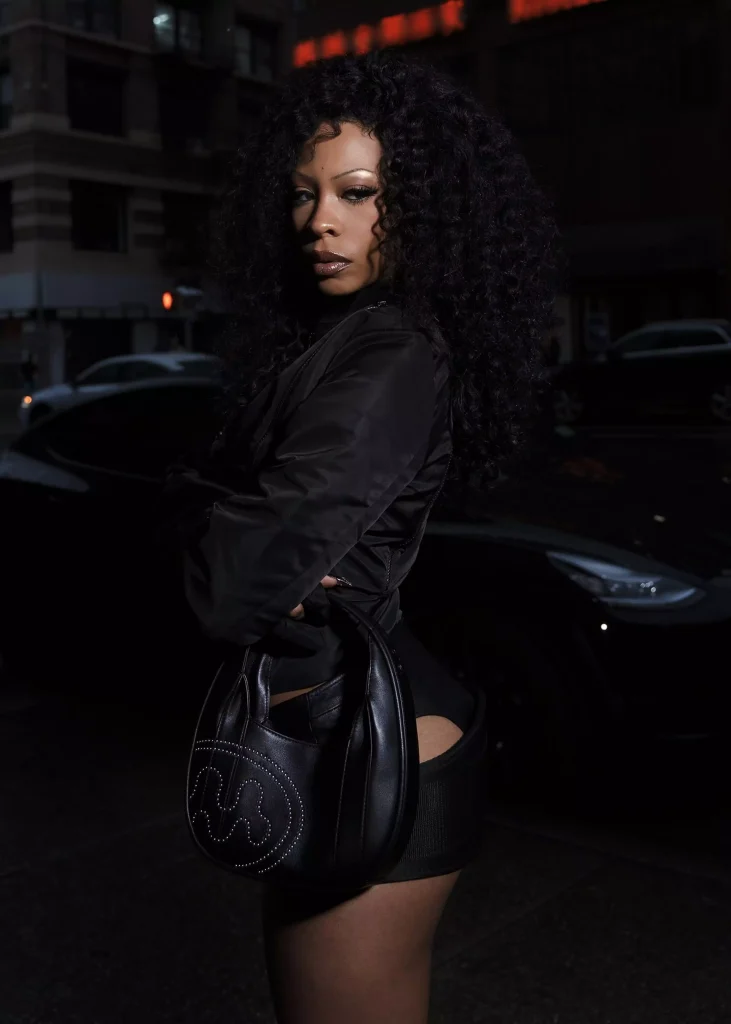
Featured Image: Marcjacobs.com
In a move that feels both unexpected and right on time, Marc Jacobs has teamed up with Mowalola—the boundary-pushing, London-based Black-owned label led by designer Mowalola Ogunlesi. The limited-edition collection, dripping in Y2K nostalgia and downtown NYC swagger, is bold, edgy, and saturated with Mowalola’s signature aesthetic: raw, sensual, and undeniably fueled by Black punk energy.
But beyond the aesthetics, this collaboration sparks necessary questions: Is this the beginning of a more equitable era where luxury authentically meets the underground? Or is it just another chapter in fashion’s long-standing trend of tapping Black creativity when it’s convenient and profitable?

Luxury houses have increasingly sought clout through collaborations with underground, BIPOC-owned, and streetwear-adjacent brands—part of fashion’s pivot toward relevance and youth culture. Marc Jacobs by Mowalola fits within that trend, but also manages to break new ground.
Mowalola isn’t just a creative director or stylist—she’s a designer with a fully formed, unapologetic vision. Her work as founder of her namesake brand, and as former creative director of Kanye West’s Yeezy Gap project, has positioned her as a defining voice for the next generation of Black fashion.
By giving Mowalola full creative freedom to reimagine Marc Jacobs through her lens, this isn’t just another collaboration—it’s an amplification. The capsule doesn’t dilute her aesthetic; it heightens it through the legacy of a major American fashion house.
The potential here is exciting. If executed with integrity, this partnership could signal a more intentional shift in how legacy brands engage with Black creatives—not as seasonal novelties or diversity tokens, but as equal partners with full creative ownership.
Done right, this could pave the way for more Black-owned brands to scale without compromising their identity. Imagine a future where houses like Prada, Chanel, or Saint Laurent provide platforms—not just limited-edition collections—to designers like Theophilio, Martine Rose, or Kenneth Ize. But let’s be real: execution is everything. Will these partnerships result in sustained visibility and profit-sharing? Or will they be reduced to hype-driven, one-off drops with no long-term impact?
There’s always a risk that collaborations like these simply repeat the formula—tap into Black culture while it’s trending, tokenize the creators, then move on. Without long-term investment and a true shift in the power structure, it’s not collaboration—it’s extraction. The fashion industry still has serious work to do to dismantle the systemic barriers that keep Black designers on the margins.
From a business perspective, the collaboration is a smart move. Mowalola brings heat, edge, and Gen Z credibility. Marc Jacobs gets a dose of renewed relevance and cultural cachet. If the drop sells out—and all signs suggest it will—it could reinvigorate the Marc Jacobs brand within the youth market while expanding Mowalola’s global reach. Mutually beneficial, if it stays mutual.
Timing is everything. As luxury fashion faces a cultural shift in consumer values, collabs like this are one of the few places where experimentation still feels fresh, welcome—even urgent.
Unlike many designers, Marc Jacobs has a track record of not just acknowledging, but uplifting Black culture. When asked about his iconic nails in a 2024 interview, he proudly credited Black women—specifically Flo-Jo and Sha’Carri Richardson, along with rap legends Lil’ Kim and Missy Elliott. Seeing a designer of his stature name names, give real credit, and do so without performativity is rare. It gave me hope. And once I saw how freely Mowalola was able to design without restriction, my excitement grew.
The Marc Jacobs x Mowalola collection is a moment worth celebrating—but also worth studying. Its success could shape the future of how the industry defines equity, collaboration, and creative power. Is this a one-time flash of shared brilliance, or a signal that fashion is finally ready to let Black creatives lead, build, and stay?
We’ll be watching. Not just how the pieces sell, but what this collaboration truly means.
[simple-author-box]

Luxury As luxury fashion embraces Black men in campaigns, a deeper question emerges—are they being fully seen or simply styled into the same streetwear mold? Read More
Interviews Teddy Phillips redefines spirituality and style by transforming bib- lical figures into high-fashion icons, weaving Black culture, luxury couture, and divine narratives into a Read More