No products in the cart.


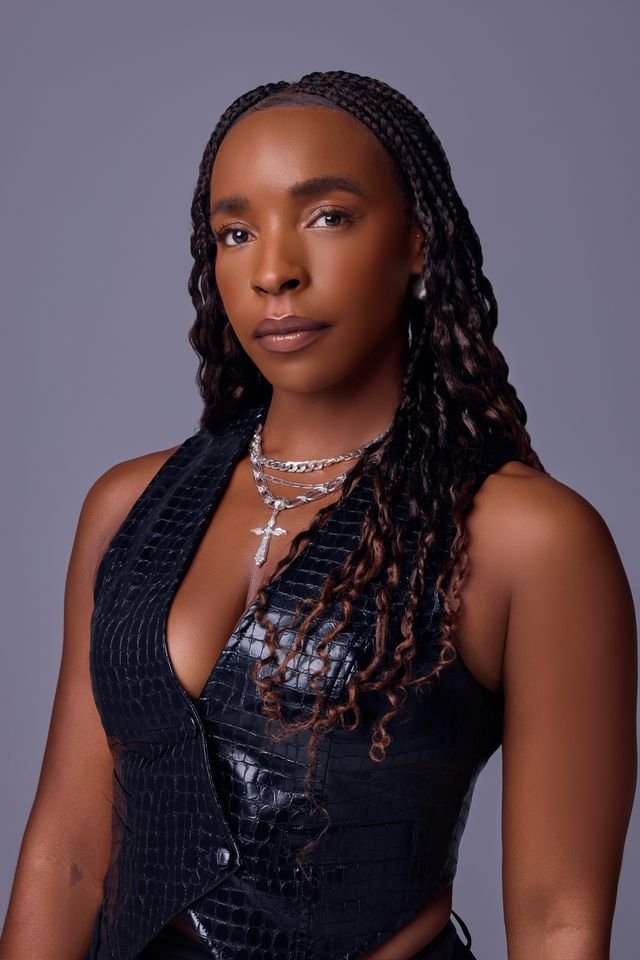
Featured Image: Jade Ikazoboh
Entrepreneurship is steadily on the rise across industries, and Black creatives are making sure they aren’t left behind. Now more than ever, they are reshaping the fashion industry and proving that ownership and artistry often go hand-in-hand.
In the years following the COVID-19 pandemic, brands and entrepreneurs made it their mission to reimagine what business ownership could look like. For Black creatives, this challenge is especially difficult in an industry dominated by white male gatekeepers. According to Vogue, only 7 to 10 percent of small fashion businesses are Black-owned, and even fewer are carried by major retailers. So how do Black professionals make a name for themselves and take up space in an industry that has historically treated Black talent as an afterthought? In true Black fashion, creatives of color are no longer asking for seats at exclusionary tables—they are building their own.
Organizations like the Black in Fashion Council and Harlem’s Fashion Row have been instrumental in supporting this shift. The Black in Fashion Council, for example, has platformed more than 75 Black designers, including Fumi the Label, VICTIM15, and Lisou, while Harlem’s Fashion Row works to bridge the gap between designers of color and retailers. Still, Black entrepreneurs face major challenges with representation and funding. Creatives are tackling these barriers head-on by building businesses that center community and expand the fashion ecosystem beyond the runway.
Two entrepreneurs doing just that are Jade Ikazoboh of Etcetera Los Angeles and Aunna Kelly of Starvn Artist Studio.
Visionary Los Angeles native Jade Ikazoboh started her own public relations showroom in the heart of downtown Los Angeles after years of working behind the scenes. An interest in styling led her to the world of costume design, where she spent long days transporting luxury garments across the city. Those experiences introduced her to the inner workings of fashion showrooms. After interning with People’s Revolution under the direction of Kelly Cutrone, she decided to take the leap of faith and launch her own firm.
Since its founding, Ikazoboh’s Etcetera Los Angeles has dressed some of the industry’s biggest stars, including Bad Bunny, Doechii, and Doja Cat. She has also created a space deeply rooted in collaboration with designers of color. “One thing I’ve done with my company is identify emerging talent and artists and place on them before they make it to the mainstream,” she said. “It’s really nice for me to work with designers who are more excited for those placements.”
But building her business was far from easy. Like many Black entrepreneurs, Ikazoboh faced steep financial constraints, often working for little to no pay. Beyond money, she had to navigate the unspoken politics of running a fashion showroom—from chasing down late payments to finding the delicate balance between being firm and approachable when asking for compensation. “I started off with all my contacts from brands and I offered my services for damn near free,” Ikazoboh said. “So, the challenges were mostly monetary. I was struggling, but I was working for myself and doing what I enjoy.”
Despite those hurdles, Ikazoboh managed to push forward. Today, Etcetera Los Angeles has been thriving for nearly a decade. Her passion for building long-lasting connections with brands and providing a platform for designers of color has become the foundation of the company’s ethos—a philosophy she hopes will eventually ripple into the mainstream industry. “I really think we’re in an interesting space where Black culture is not a subculture—we are the main culture. So that means our brands can be, too,” Ikazoboh asserted. “I would really like the future of fashion to look like bigger names wearing smaller brands, instead of only embracing household names that don’t need your help.”
She acknowledges the undeniable power of celebrity placement for an emerging brand. One appearance on the right red carpet can change the trajectory of a designer’s career, especially a designer of color. Etcetera Los Angeles’ growing roster of brands includes exciting Black designers such as Megan Renee, Margier Paris, and Bohn Jsell. These brands have been worn by some of Black Hollywood’s biggest stars, including Big Sean, Issa Rae, and Meagan Good. Looking ahead, Ikazoboh hopes Black creatives and aspiring business owners view their identity as a strength, not a limitation. For her, embracing differences is not only a way to propel oneself forward but also a responsibility to lift the next generation of Black creatives alongside you.
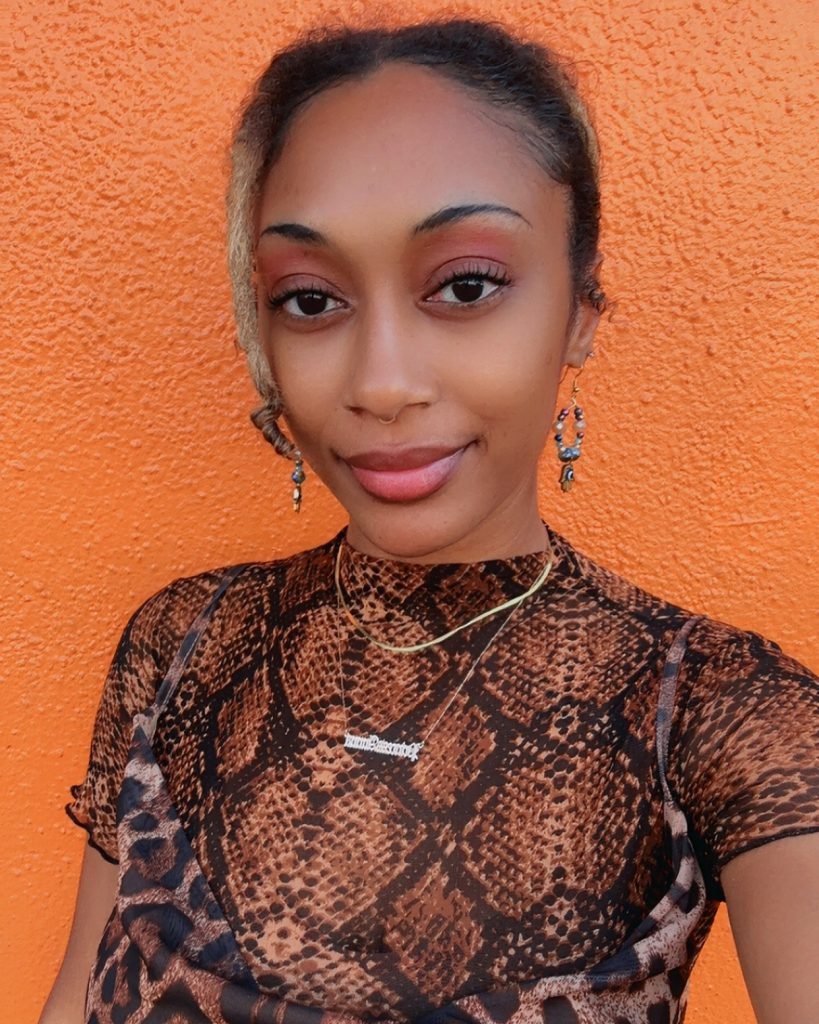
The multi-disciplinary creative powerhouse Aunna Kelly is making waves in the world of fashion styling and beyond. Describing herself as a “well-rounded artist,” Kelly began her career as a visual artist in her hometown of Shreveport, Louisiana. Starvn Artist Studio (originally launched as Starving Artist Lifestyle Brand) is her brainchild—a company she envisions as a platform to empower the next generation of industry creatives.
The name itself, once a derogatory phrase, has been reclaimed both as a nod to her beginnings and as a reminder of the company’s mission. Her sense of direction solidified after a month-long trip to Los Angeles in 2018 changed the trajectory of her career. A three-month stint with Opening Ceremony introduced her to a new network, eventually leading to a styling assistant opportunity—and the rest is history.
“My first styling gig ever as an intern was for Gunna and Lil Baby’s ‘Drip Too Hard’ music video,” Kelly shared. “From that job, that’s how my career started. After that day, I ended up being a styling assistant for like three years.” Her big break came in 2021 when she stepped into the role of lead stylist for Young Thug.
“Seeing another side of fashion, I really didn’t know you could be a wardrobe stylist as a real job. That’s when I decided I wanted to switch over to focus on styling, and I started working with Young Thug pretty heavily,” she shared. “I was styling so much of his stuff, that I was at the top of my career and I was having my way.” But even with a star-studded client list, Kelly confronted obstacles that often plague Black creatives in fashion, particularly gatekeeping. Transitioning from assistant stylist to lead stylist proved difficult in an industry where opportunities are closely guarded.
“Going from an assistant stylist to a lead stylist is very challenging,” Kelly said. “I was trying to navigate how to put myself first, while also being empathetic to how things could be for other people. I would sometimes hold myself back from positions because I was worried about how it would make someone else feel.” That exclusionary, cliquey culture only fueled her passion for mentorship and teaching other aspiring creatives.
“I put my people on. When I started having my own clients and assistants, I made sure to train them in a way that was everything I didn’t receive,” Kelly said. “I structured my company and my team based on my experience, so I took what I went through and used it to set us up for success.” By building a company that acknowledges her own early struggles, Kelly has built a reputation for excellence grounded in etiquette, work ethic, and hospitality. Her word-of-mouth credibility is the key to Starvn Artist Studio’s growth and success.
Now approaching its tenth year, the studio has evolved into a full creative consulting agency and is expanding beyond fashion styling. “My goal is also to branch out and have it be a platform for different artists who have different art forms to have a space to showcase themselves,” Kelly said. “I’ve always felt like it was hard for artists to have a platform to show what they can do because where I’m from art is not taken seriously. It’s not seen as a real career.”
Together, these stories illustrate how Black creatives are building careers and infrastructures outside of the fashion industry’s status quo. And while challenges remain, the progress is undeniable. From showrooms to styling studios, nonprofits to talent agencies, these creatives are showing how ownership can be used as a tool for transformation.
[simple-author-box]
Business Brandon Blackwood NYC is celebrating ten years of success, from the viral End Systemic Racism tote to a history-making American Airlines partnership. His journey Read More
Style The 90s and 2000s bandage dress is back—but this time, Black designers are reinventing it with bold cuts, cultural storytelling, and a modern edge Read More
Luxury As luxury fashion embraces Black men in campaigns, a deeper question emerges—are they being fully seen or simply styled into the same streetwear mold? Read More
